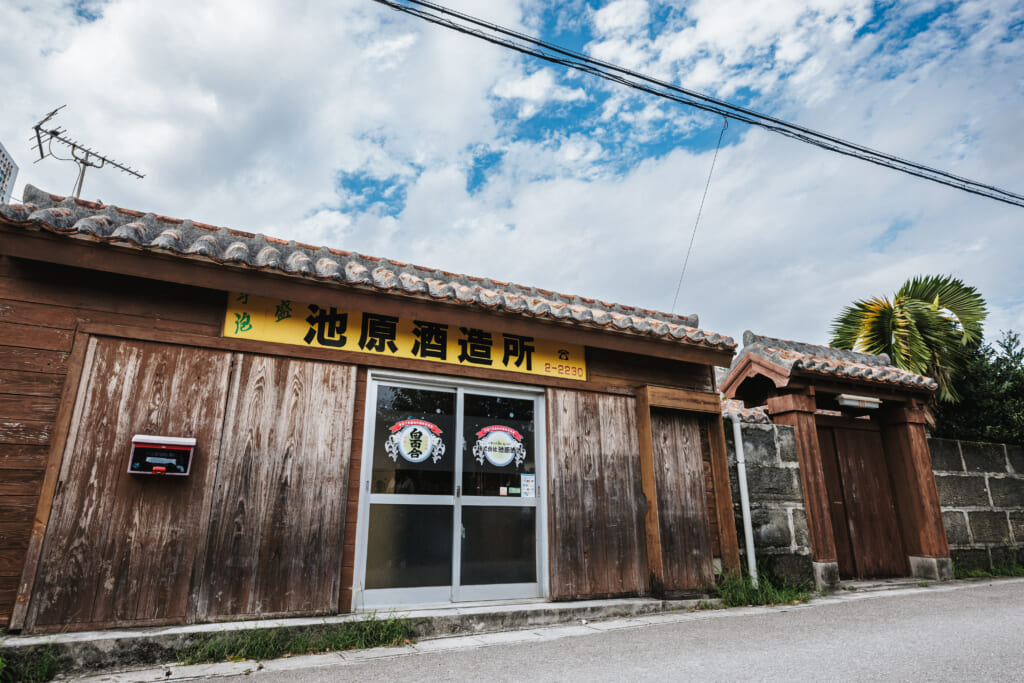
The first thing I noticed was the building.
Ikehara Distillery sits quietly in a narrow street in Ishigaki City, inside an old wooden structure that feels closer to a family home than to a production facility. Behind the sliding doors is a small shop, a corridor, a glimpse of a garden, and further inside, the dark, humid space where Awamori is still made largely by hand.
I had come for a hands-on Awamori experience. I expected a tour.
Within minutes, I was rolling up my sleeves.
A spirit shaped by Okinawa
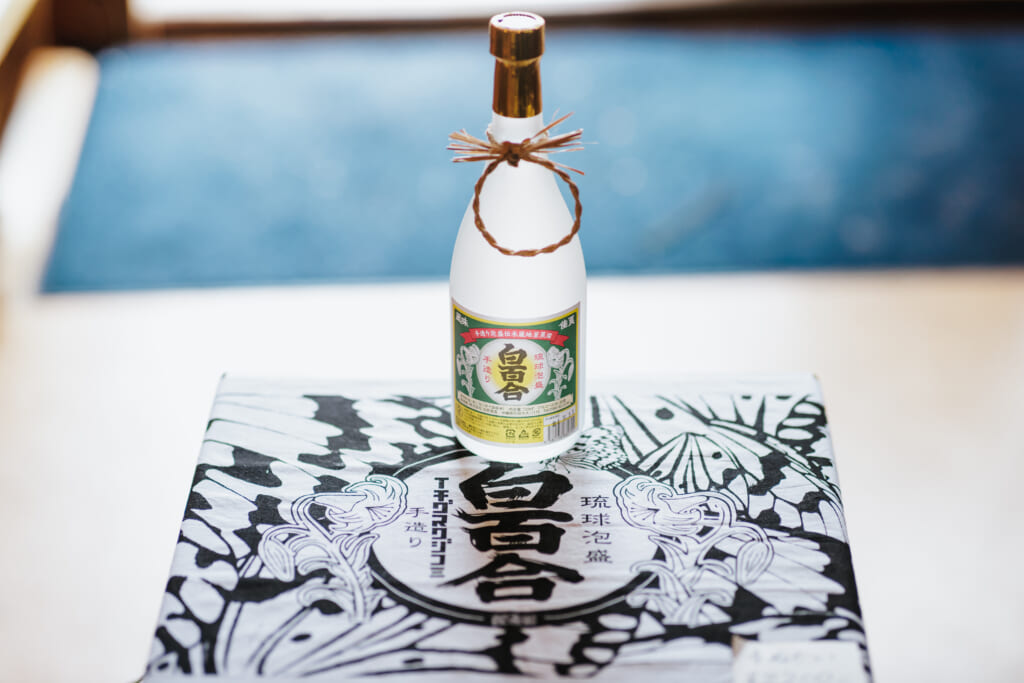
Awamori is one of Okinawa’s defining spirits. It is made from rice koji using black koji mould, water and yeast, then distilled. Black koji is particularly well suited to Okinawa’s warm, humid climate because the citric acid it produces helps protect the fermentation from unwanted bacteria.
At Ikehara, however, this tradition feels anything but abstract.
Three generations in one distillery
Ikehara Distillery was founded in 1951 by Koukichi Ikehara and his wife Nobuko. After Koukichi died young, Nobuko continued the distillery while raising their children. Today it is run by the third generation, Yuu Ikehara.
The family history is still present in the building. So are the tools, tanks and koji room that have been used over many years.
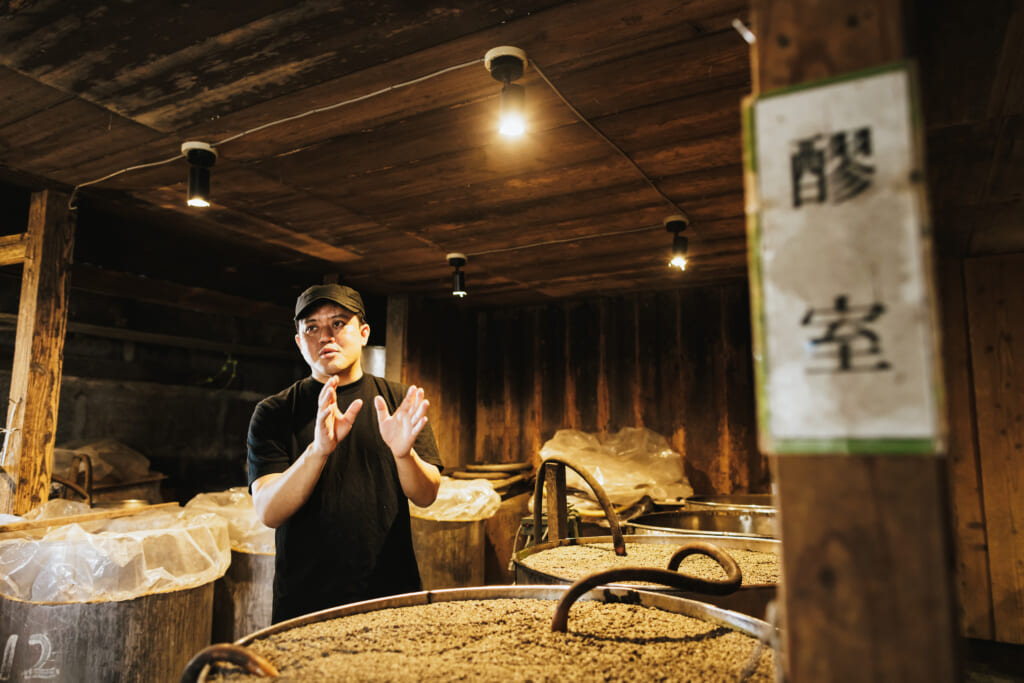
Yuu describes fermentation as a living process that needs close observation. For that reason, Ikehara keeps the process in the hands of its makers.
That balance immediately interested me.
Tradition here stays alive through daily practice.
Steam, rice and black Koji
We move deeper into the distillery.
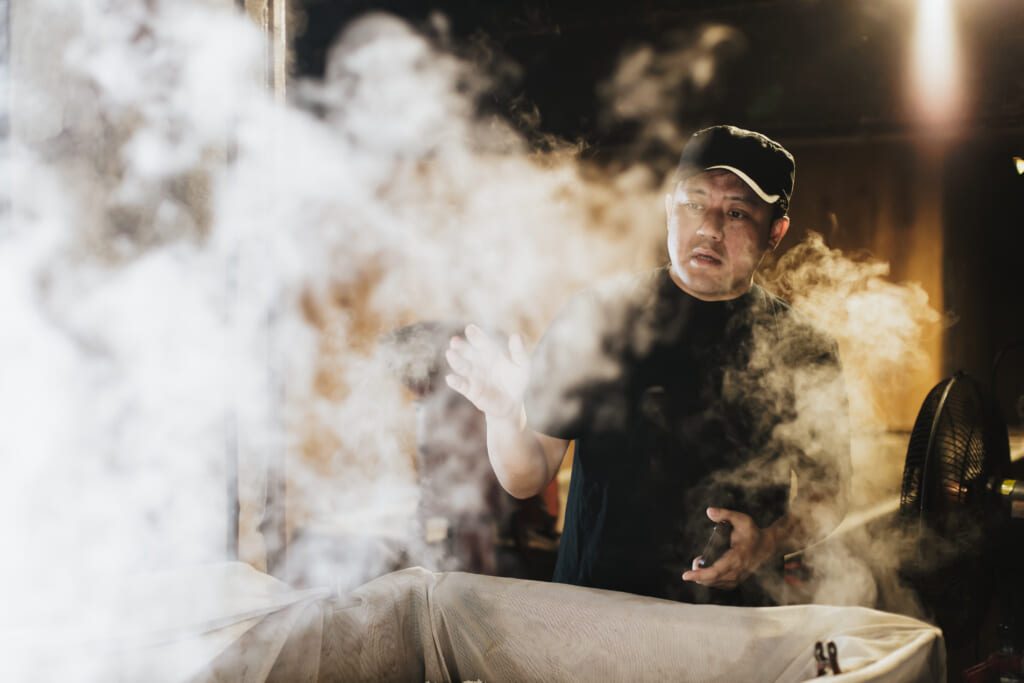
The atmosphere changes first. It is darker, hotter and heavy with steam. The smell of warm rice fills the room.
Freshly steamed rice is transferred onto wooden trays and spread out to cool before black koji is introduced. Soon I am holding a shovel, moving the warm rice across a bed of bamboo and Japanese cedar.
This kind of physical work feels familiar to me. Working with clay has made me attentive to materials through the hands, and here the same thing happens with rice. Temperature, moisture, texture and timing matter.
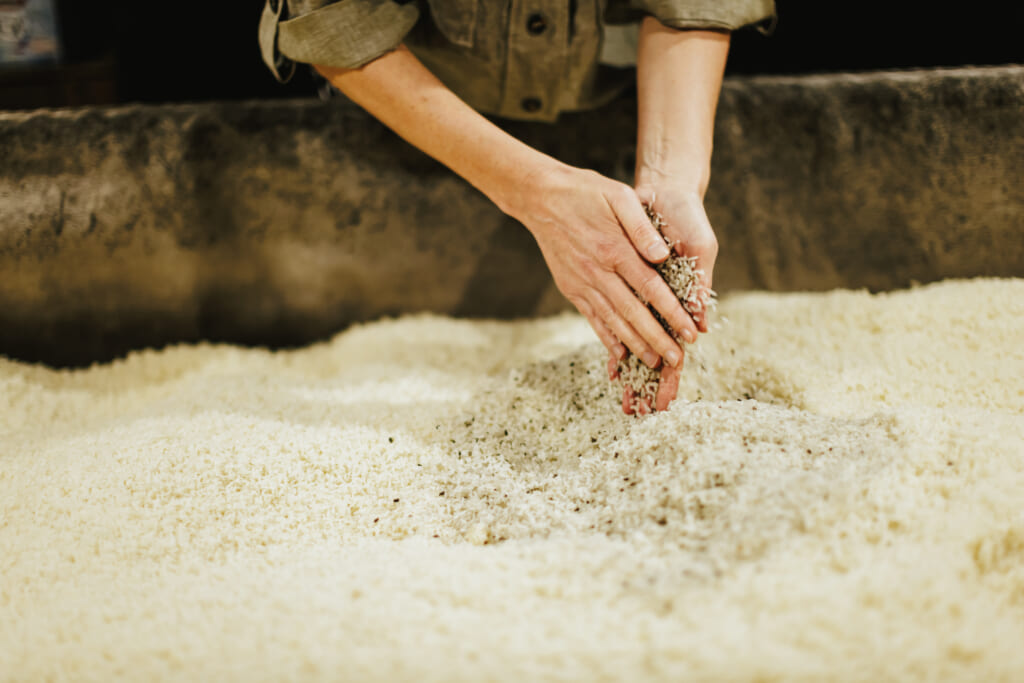
Later, the black koji is worked through the rice by hand.
Each step requires skill and close attention.
Open the original video or map ↗
Craft as observation
The technical process continues through fermentation and distillation, but what stays with me most is the need to watch.
Materials change. Microorganisms act. Temperature shifts. The person making the Awamori responds.
That relationship between maker and process is probably what interests me most about Ikehara Distillery. The hands remain involved because they are part of how subtle changes are noticed.
For me, that makes the distillery feel unexpectedly close to a ceramic studio.
Different material, different outcome, but a similar attention to transformation.
More than a production space
After the hands-on work, we return to the small shop at the front of the building.
Looking back down the corridor, the distillery still feels inseparable from the family home around it. That intimacy was one of the most memorable parts of the visit.
I had expected to learn how Awamori is made.
I came away thinking about something broader: how knowledge remains alive when it is practised every day, passed between generations, and still allowed to change.
That may be what makes Ikehara Distillery feel both old and contemporary at the same time.
Experience Ikehara Distillery
For current information about the hands-on experience described here, check the provider’s details before making plans.
Read more about the Ikehara Distillery experience →
This article was commissioned and may contain affiliate booking links.
Commissioned article for DiscoverYaima.
Many thanks to:
Ikehara Distillery, Yuu Ikehara
Photography: Kou Miyara